

Vyvanse and Adderall are two prescription stimulant medications commonly used to treat attention-deficit/hyperactivity disorder (ADHD). Both can improve attention and reduce impulsivity, but they contain different ingredients, work differently in the body, and are available in different formulations.
The pills themselves can also look very different. Adderall may be a blue or peach-colored tablet, while Vyvanse is commonly recognized by its colorful capsules marked with the imprint S489. Both medications have generic versions, which may look different from their brand-name counterparts.
Understanding the differences between Vyvanse and Adderall is important whether you’re researching an ADHD prescription, trying to identify a medication, or looking into the potential risks of stimulant use.
What Is the Difference Between Vyvanse and Adderall?
The biggest difference between Vyvanse and Adderall is how the medications deliver their active ingredients.
Adderall contains a combination of amphetamine salts, including dextroamphetamine and levoamphetamine. These ingredients are already pharmacologically active when the medication is absorbed.
Vyvanse contains lisdexamfetamine, which is a prodrug. This means the body must convert it into its active form, dextroamphetamine, before it produces its intended stimulant effects.
Both medications affect neurotransmitters such as dopamine and norepinephrine, which are involved in attention, motivation, alertness, and other functions.
However, the way each medication is processed influences how quickly its effects begin and how long they last.
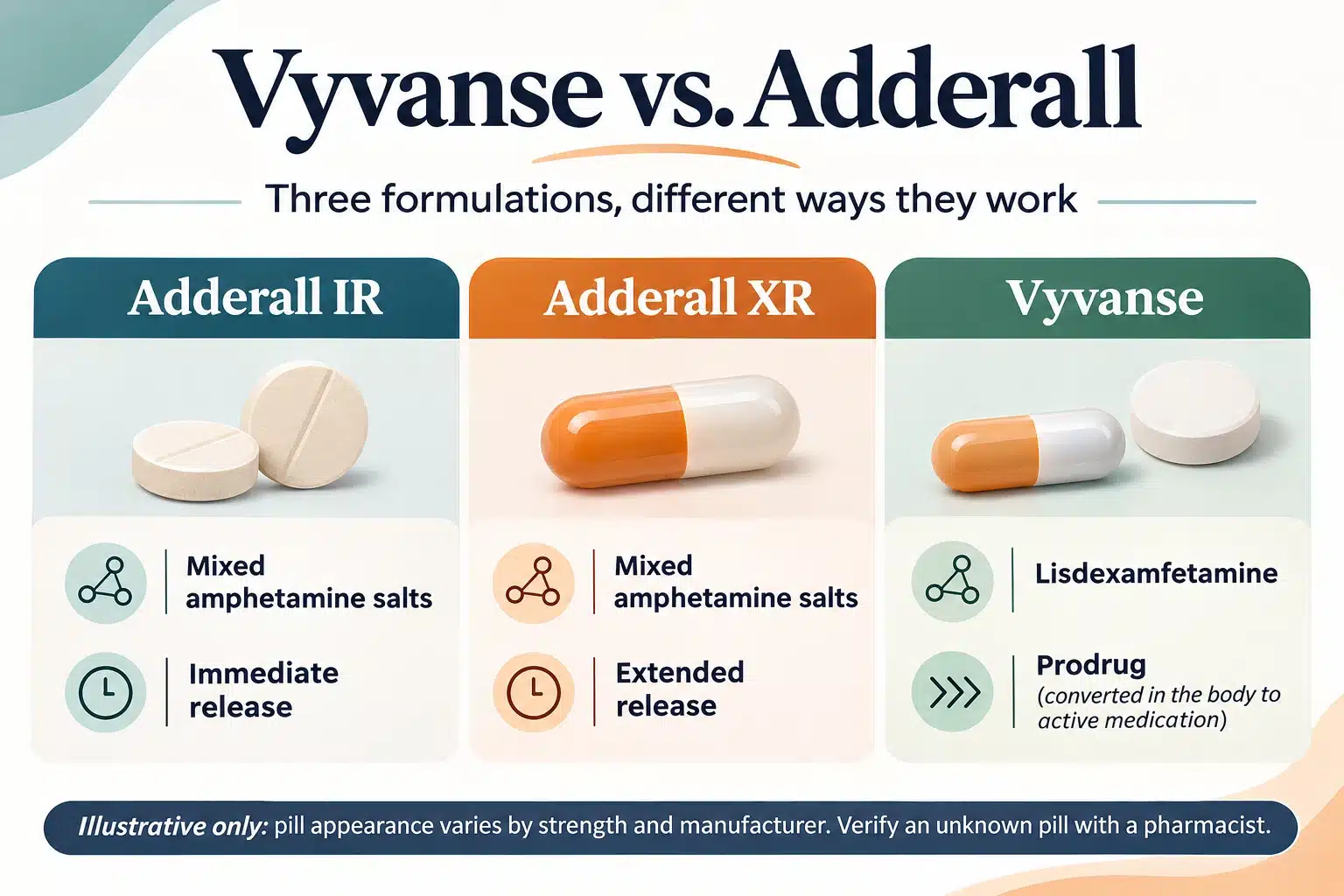
Vyvanse vs. Adderall Comparison Chart
| Feature | Adderall IR | Adderall XR | Vyvanse |
|---|---|---|---|
| Generic name | Mixed amphetamine salts | Mixed amphetamine salts ER | Lisdexamfetamine |
| Medication type | CNS stimulant | CNS stimulant | CNS stimulant prodrug |
| Form | Tablet | Extended-release capsule | Capsule or chewable tablet |
| Approximate duration | 4–6 hours | Around 12 hours | Around 13–14 hours |
| FDA-approved uses | ADHD, narcolepsy | ADHD | ADHD, moderate-to-severe binge eating disorder in adults |
| Generic available | Yes | Yes | Yes |
| Controlled substance | Schedule II | Schedule II | Schedule II |
Duration estimates are approximate and vary by individual. The effects of a medication may last longer or shorter depending on the person and clinical circumstances.
Neither medication is automatically better than the other. A healthcare provider considers the person’s symptoms, medical history, response to treatment, and side effects when determining which medication may be appropriate.
What Do Adderall Pills Look Like?
Adderall comes in two main formulations: immediate-release tablets and extended-release capsules.
The pills differ in appearance based on their strength and whether they are brand-name or generic products.
Adderall Immediate-Release Pill Colors, Shapes, and Imprints
Brand-name Adderall immediate-release tablets are available in seven strengths ranging from 5 mg to 30 mg.
According to the official Adderall prescribing information published by DailyMed, the brand-name tablets have the following identifying characteristics:
| Strength | Color | Shape | Imprint |
|---|---|---|---|
| 5 mg | White/off-white | Round | dp / 5 |
| 7.5 mg | Blue | Oval | dp / 7.5 |
| 10 mg | Blue | Round | dp / 10 |
| 12.5 mg | Peach | Round | dp / 12.5 |
| 15 mg | Peach | Oval | dp / 15 |
| 20 mg | Peach | Round | dp / 20 |
| 30 mg | Peach | Round | dp / 30 |
The markings are shown in simplified form. Actual tablets have different score lines and arrangements of the letters and numbers.
For example, the brand-name Adderall 10 mg immediate-release tablet is blue and round, with markings identifying the manufacturer and strength.
The brand-name Adderall 30 mg tablet is peach-colored and round.
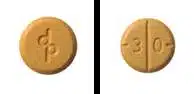
Some older versions and other amphetamine products may have different identifying marks. Generic amphetamine/dextroamphetamine tablets can also look completely different.
Pill color alone is not enough to identify Adderall. A pharmacist should verify the complete imprint, shape, strength, and manufacturer before an unfamiliar pill is taken.
What Does Adderall XR Look Like?
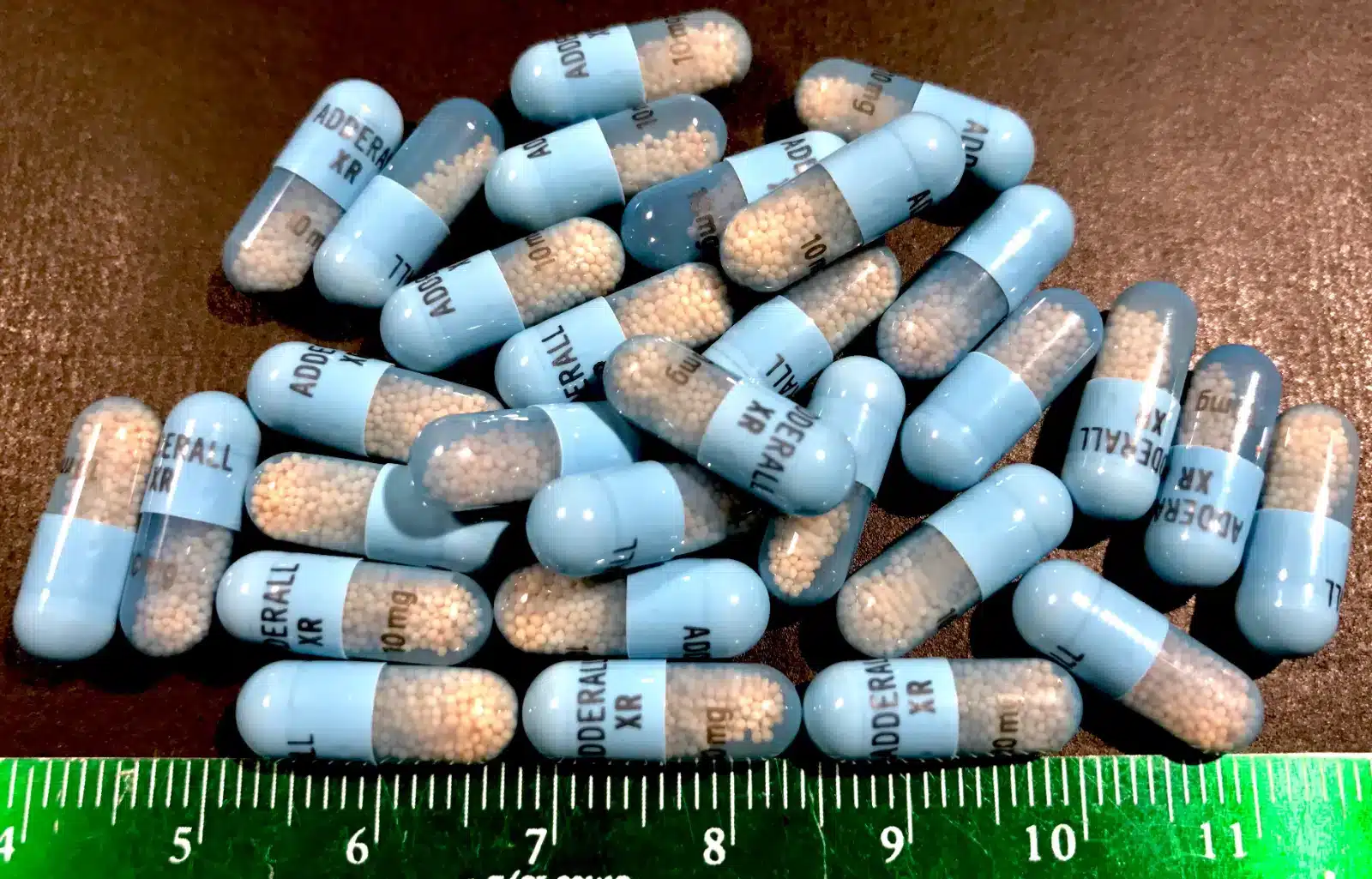
Adderall XR is the extended-release version of Adderall. Rather than a compressed tablet, it comes in a capsule containing medication beads.
Brand-name Adderall XR capsules are available in six strengths.
| Strength | Capsule color | Identifying imprint |
|---|---|---|
| 5 mg | Clear and blue | ADDERALL XR 5 mg |
| 10 mg | Blue and blue | ADDERALL XR 10 mg |
| 15 mg | Blue and white | ADDERALL XR 15 mg |
| 20 mg | Orange and orange | ADDERALL XR 20 mg |
| 25 mg | Orange and white | ADDERALL XR 25 mg |
| 30 mg | Natural/clear and orange | ADDERALL XR 30 mg |
These descriptions come from the Adderall XR prescribing information.
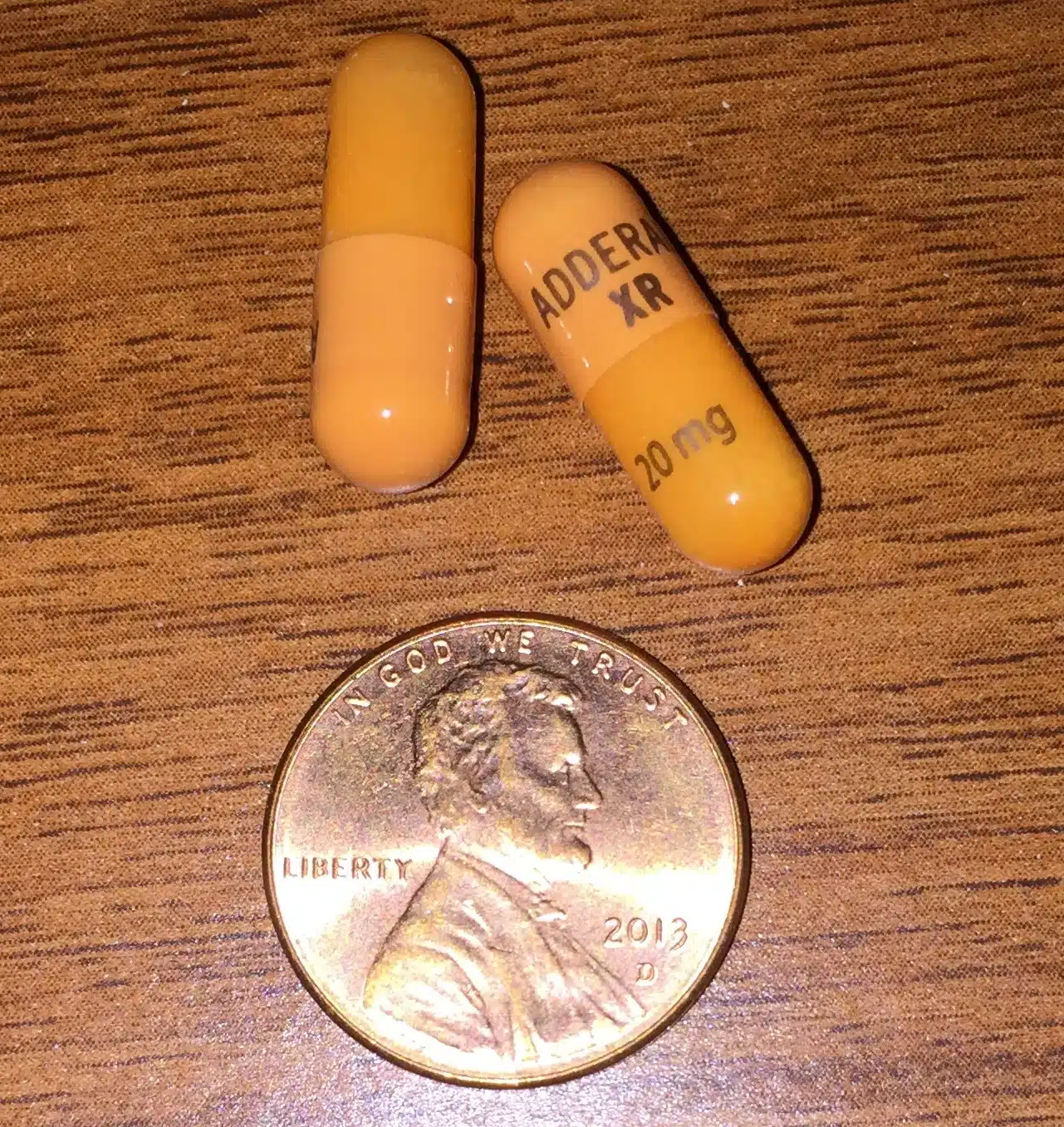
Someone searching for an orange Adderall capsule may be referring to the brand-name 20 mg extended-release formulation.
However, generic extended-release amphetamine capsules may have different colors and imprints.
What Do Vyvanse Pills Look Like?
Vyvanse is available as capsules and chewable tablets.
The brand-name capsules are particularly recognizable because of their color combinations and the identifying imprint S489.
Vyvanse Capsule Colors and Imprints
According to the official Vyvanse prescribing information, the brand-name capsules have the following characteristics:
| Strength | Capsule colors | Imprint |
|---|---|---|
| 10 mg | Pink and pink | S489 10 mg |
| 20 mg | Ivory and ivory | S489 20 mg |
| 30 mg | White and orange | S489 30 mg |
| 40 mg | White and blue-green | S489 40 mg |
| 50 mg | White and blue | S489 50 mg |
| 60 mg | Aqua blue and aqua blue | S489 60 mg |
| 70 mg | Blue and orange | S489 70 mg |
For example, a white-and-orange capsule marked S489 30 mg matches the description of brand-name Vyvanse 30 mg.
A blue-and-orange capsule marked S489 70 mg matches the description of brand-name Vyvanse 70 mg.
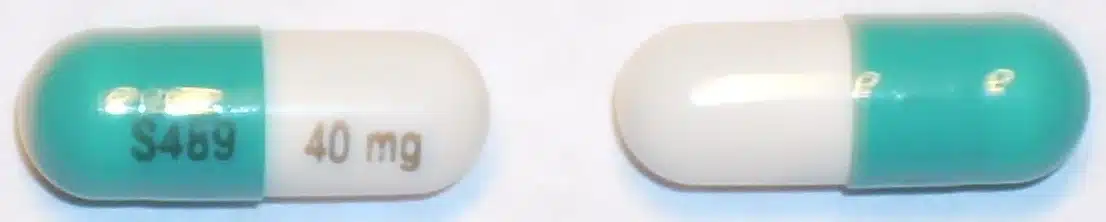
Although these characteristics can help identify a medication, they do not establish that a pill is authentic.
Does Vyvanse Come in Tablet Form?
Yes. Vyvanse also comes as chewable tablets in strengths from 10 mg to 60 mg.
The brand-name chewable tablets are white to off-white, with different shapes depending on the strength.
| Strength | Shape |
|---|---|
| 10 mg | Round |
| 20 mg | Hexagonal |
| 30 mg | Rounded triangular |
| 40 mg | Capsule-shaped |
| 50 mg | Rounded square |
| 60 mg | Rounded diamond |
The tablets are marked with S489 on one side and the strength on the other.
The capsules and chewable tablets contain the same active ingredient, lisdexamfetamine, but patients should follow the specific instructions for the formulation they have been prescribed.
What Is Generic Vyvanse Called?
The generic name for Vyvanse is lisdexamfetamine, commonly listed on prescription labels as lisdexamfetamine dimesylate.
Generic versions became available in the United States in 2023.
Although generic lisdexamfetamine contains the same active ingredient as Vyvanse, the appearance may vary depending on the manufacturer.
Generic capsules may use different colors or imprints from the brand-name version.
This means someone accustomed to receiving a particular color of Vyvanse capsule may notice a different-looking medication after their pharmacy changes manufacturers.
A change in appearance does not automatically mean the medication is incorrect, but it should be verified.
What Is Generic Adderall Called?
Generic Adderall is commonly labeled amphetamine/dextroamphetamine or mixed amphetamine salts.
The name may also appear as amphetamine salt combination.
Generic Adderall is available in immediate-release and extended-release formulations.
These are not interchangeable simply because the active ingredients are similar. The release formulation determines how medication enters the body over time.
Generic manufacturers may use different pill colors, imprints, or shapes.
For example, one manufacturer may produce a white tablet of a particular strength while another uses a different color or marking.
Anyone who receives an unfamiliar pill should check with the dispensing pharmacy rather than relying on appearance alone.
Why Does Vyvanse Last Longer Than Adderall?
Both medications are amphetamine-based stimulants, but they are designed to work differently.
Adderall Immediate-Release
Adderall IR contains active amphetamine salts in a tablet that releases medication relatively quickly after administration.
Its noticeable effects commonly last approximately four to six hours.
Depending on the treatment plan, a prescriber may use more than one dose during the day.
Adderall XR
Adderall XR contains two types of medication beads.
One portion releases medication relatively quickly, while another portion is designed to release medication later.
This creates a longer period of action, generally around 12 hours.
Vyvanse
Vyvanse works differently from Adderall XR.
Rather than using two stages of bead-based release, Vyvanse contains lisdexamfetamine, which must be converted into dextroamphetamine.
This conversion occurs primarily in the blood.
Vyvanse may provide symptom control for approximately 13 to 14 hours, although the duration varies by person.
Does Vyvanse Work Immediately?
No. Vyvanse must first be absorbed and converted into its active form.
However, that doesn’t mean someone will necessarily notice a dramatically slower onset than with every Adderall formulation.
The timing and perceived effects depend on several factors, including the formulation being compared and the person’s individual response.
Is Vyvanse Stronger Than Adderall?
Vyvanse and Adderall cannot be compared directly by the milligram number printed on the prescription.
For example, 30 mg of Vyvanse is not equivalent to 30 mg of Adderall.
Vyvanse contains lisdexamfetamine, a molecule that is converted into active dextroamphetamine. Adderall contains a mixture of active amphetamine salts.
The medications also differ in their release and absorption characteristics.
As a result, there is no universal milligram-for-milligram conversion that patients should use to switch between them.
A healthcare professional must determine an appropriate medication and dose based on individual circumstances.
Neither medication should be substituted for the other without guidance from the prescribing clinician.
Vyvanse vs. Adderall Side Effects
Vyvanse and Adderall share many potential side effects because both ultimately produce amphetamine-related stimulant effects.
Common side effects may include:
- Decreased appetite
- Difficulty sleeping
- Dry mouth
- Headaches
- Anxiety or irritability
- Nausea or stomach discomfort
- Increased heart rate
- Increased blood pressure
- Weight loss
Side effects can differ depending on the dose, formulation, individual sensitivity, and other medications being taken.
Because Vyvanse and Adderall XR are long-acting medications, their effects may continue later into the day, potentially interfering with sleep.
Can Vyvanse or Adderall Cause Heart Problems?
Both medications can increase heart rate and blood pressure.
The FDA-approved prescribing information also warns about potential serious cardiovascular complications, particularly in people with certain existing heart conditions.
Clinicians generally consider cardiovascular history and monitor blood pressure and heart rate when prescribing stimulant medications.
Patients should report concerning symptoms or changes in their health to their prescriber.
Chest pain, fainting, severe confusion, seizures, or other symptoms suggesting a medical emergency require immediate attention.
Can Adderall or Vyvanse Make Anxiety Worse?
Yes. Both medications can cause or worsen anxiety, restlessness, and irritability in some people.
They can also affect sleep, which may contribute to emotional symptoms.
However, some people with ADHD experience improvements in overall daily functioning and distress when their ADHD symptoms are appropriately treated.
The response is individual, which is one reason medication monitoring is important.
Is Vyvanse Less Addictive Than Adderall?
This is one of the more complicated differences between the two medications.
Vyvanse is a prodrug, meaning it requires conversion into active dextroamphetamine before producing stimulant effects.
This characteristic has led researchers to examine whether Vyvanse differs from certain other amphetamine formulations in its potential for misuse.
However, Vyvanse is not addiction-proof, and it should not automatically be considered less addictive than Adderall for every person.
Both medications are classified as Schedule II controlled substances.
Both also carry FDA boxed warnings regarding their potential for abuse, misuse, and addiction.
The FDA’s prescription stimulant safety communication explains that prescription stimulants can cause serious harm when misused, including overdose and death.
Risk depends on several factors, including how the medication is used, the amount taken, individual vulnerability, and any history of substance use problems.
Neither medication should be taken differently than prescribed.
What Is the Difference Between Dependence and Addiction?
Physical dependence and addiction are not the same thing.
Physical dependence occurs when the body adapts to repeated exposure to a substance. Stopping or significantly reducing use may produce withdrawal symptoms.
Addiction, associated with substance use disorder, involves patterns such as impaired control over use, continued use despite harmful consequences, and difficulty reducing or stopping use.
Someone can develop physical dependence on a medication without having a substance use disorder.
Taking prescribed ADHD medication does not automatically mean someone is addicted.
However, stimulant misuse can develop into a serious problem.
Potential warning signs include taking more medication than prescribed, using someone else’s medication, repeatedly attempting to cut back unsuccessfully, or continuing use despite significant harm to health or daily functioning.
These concerns deserve medical attention without judgment or assumptions.
What Happens When You Stop Taking Vyvanse or Adderall?
Stopping stimulant medication may cause withdrawal symptoms, particularly after prolonged exposure or heavy use.
The experience depends on the medication, dose, frequency of use, duration of exposure, and individual circumstances.
Possible stimulant withdrawal symptoms
Symptoms may include:
- Significant fatigue
- Depressed mood
- Increased sleepiness or changes in sleep
- Increased appetite
- Difficulty concentrating
- Irritability
- Vivid or unpleasant dreams
- Restlessness or slowed activity
Some people describe a period of exhaustion or low motivation after discontinuing stimulants.
The severity and duration of these symptoms vary considerably.
Someone stopping a prescribed stimulant with their healthcare provider’s guidance may experience a different course than someone discontinuing high-dose, nonmedical stimulant use.
Is Stimulant Withdrawal Dangerous?
Stimulant withdrawal is generally different from alcohol or benzodiazepine withdrawal.
Uncomplicated stimulant withdrawal does not typically carry the same risk of life-threatening withdrawal seizures or delirium tremens.
However, the psychiatric symptoms can be serious.
Depression, severe emotional distress, and suicidal thoughts may occur, particularly after heavy or prolonged stimulant use.
People experiencing significant symptoms should seek medical or mental health evaluation.
The American Society of Addiction Medicine’s Clinical Practice Guideline on the Management of Stimulant Use Disorder addresses withdrawal, psychiatric risks, and treatment considerations.
Anyone considering stopping prescribed Vyvanse or Adderall should discuss the decision with the prescribing healthcare professional.
Can Someone With a History of Addiction Take Vyvanse or Adderall?
A history of substance use disorder does not automatically rule out treatment with stimulant medication.
ADHD and substance use disorders can occur together, and both conditions may require attention.
The ASAM and American Academy of Addiction Psychiatry guideline recommends addressing ADHD symptoms as part of care for patients with co-occurring ADHD and stimulant use disorder.
Depending on the person’s history and circumstances, clinicians may consider stimulant medications, nonstimulant medications, behavioral interventions, or a combination of approaches.
When prescription stimulants are considered appropriate, clinicians may use additional monitoring or favor certain formulations.
The goal is to treat ADHD effectively while accounting for the individual’s risk of medication misuse.
Can You Tell If Adderall Is Fake by Looking at It?
Not reliably.
Counterfeit pills can be manufactured to resemble legitimate prescription medications, including brand-name Adderall tablets.
These pills may copy the color, shape, and imprint of an authentic medication.
However, the ingredients inside may be entirely different.
Counterfeit tablets sold as Adderall have been found to contain substances such as methamphetamine or fentanyl.
This is particularly dangerous because someone may believe they’re taking a familiar stimulant medication without knowing what the pill actually contains.
Even a tablet with an apparently correct imprint cannot be assumed authentic when it comes from an unverified source.
For more information, read Liberty Health Services’ article, Understanding the Risks: Pressed Adderall.
The safest way to obtain prescription stimulants is through a licensed pharmacy using a valid prescription.
If someone finds an unidentified pill or receives a medication that looks different from what they expected, they should contact a pharmacist before taking it.
Frequently Asked Questions About Vyvanse vs. Adderall
Is Vyvanse basically Adderall?
No. Both medications are amphetamine-based stimulants, but they have different active ingredients and delivery mechanisms. Adderall contains mixed amphetamine salts, while Vyvanse contains lisdexamfetamine, which is converted into dextroamphetamine.
Is Vyvanse better than Adderall for ADHD?
Neither medication is universally better. Both are established ADHD treatments. The most appropriate option depends on individual symptoms, medical history, side effects, and response to treatment.
What does a Vyvanse 30 mg pill look like?
Brand-name Vyvanse 30 mg is a white-and-orange capsule marked S489 30 mg. Generic lisdexamfetamine capsules may look different.
What color is Adderall 20 mg?
Brand-name Adderall 20 mg immediate-release is a peach-colored round tablet. Brand-name Adderall XR 20 mg is an orange extended-release capsule. Generic versions may have different appearances.
What does S489 mean on a pill?
S489 is an identifying imprint used on brand-name Vyvanse capsules and chewable tablets. The strength is also marked on the medication. Because appearance can be imitated, the imprint alone cannot confirm authenticity.
Does Vyvanse last longer than Adderall?
Vyvanse generally lasts longer than Adderall immediate-release. Vyvanse and Adderall XR are both long-acting medications, although Vyvanse may provide a somewhat longer duration of symptom control for some people.
Can Vyvanse or Adderall cause addiction?
Yes. Both medications have recognized potential for misuse and addiction. However, taking a prescription stimulant as directed for ADHD does not automatically mean someone has a substance use disorder.
What happens if you stop taking Vyvanse suddenly?
Some people experience fatigue, depressed mood, increased appetite, or sleep changes after stopping stimulant medication. Symptoms vary depending on prior use and individual circumstances. Medication changes should be discussed with a healthcare professional.
Is generic Vyvanse the same as lisdexamfetamine?
Yes. Lisdexamfetamine is the generic name for Vyvanse. Generic formulations contain the same active ingredient but may have different inactive ingredients, colors, shapes, and imprints.
Understanding Prescription Stimulants and Their Risks
Vyvanse and Adderall are both established treatments for ADHD, but their differences extend beyond their names.
They contain different ingredients, work through different delivery mechanisms, and have different formulations and appearances. Understanding those details can help patients and caregivers make sense of their prescriptions and recognize when a medication needs to be verified.
It is equally important to understand the distinction between appropriate medical use, physical dependence, misuse, and addiction.
For people struggling to control their stimulant use, an assessment can help clarify what is happening and what treatment may be appropriate.
Liberty Health Services provides addiction treatment and medically supervised detox services in Derry, New Hampshire. Our team can help individuals and families understand available treatment options and appropriate next steps.
Learn more about prescription drug detox and addiction treatment in New Hampshire or call 855-959-4521 to speak with our admissions team.

